
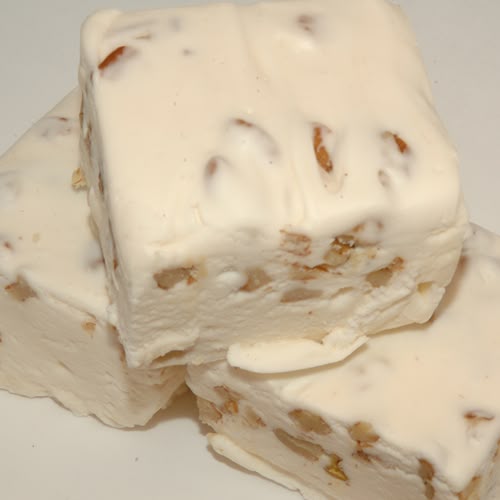
Classic Southern Divinity Fudge – A Cloud-Like Candy Tradition
Divinity Fudge is one of those legendary Southern confections that feels almost magical the moment
you make it. Light as air, snow-white, glossy, and delicately sweet, divinity is not quite fudge and not quite
nougat—it’s something beautifully unique. For generations, this candy has appeared on holiday tables, church
potlucks, and family gatherings, often made only once or twice a year because of its special technique and
unforgettable results.
What makes divinity truly irresistible is its pillowy texture. It melts gently on the tongue,
leaving behind a soft vanilla sweetness balanced by optional toasted pecans. Though it looks impressive and
elegant, divinity is made from a surprisingly small list of pantry ingredients. The key lies not in complexity,
but in precision, timing, and patience.
This recipe honors the old-fashioned method—using a candy thermometer, properly whipped egg whites, and carefully
cooked sugar syrup—to create perfect divinity every time. In this first batch, we’ll focus on understanding the
ingredients and the foundational preparation that sets the stage for success.
Ingredients & Their Essential Roles
Every ingredient in Divinity Fudge serves a very specific purpose. Because there are so few
components, each one must be treated with care and precision.
- 2 large egg whites – These are the backbone of divinity’s structure. When beaten to stiff peaks,
egg whites trap air, creating the signature light, fluffy, cloud-like texture. Fresh egg whites work best and
should be free of any yolk. - 2 cups granulated sugar – Sugar provides sweetness and structure. When cooked properly with
syrup and water, it forms the stable candy base that allows divinity to set without becoming grainy. - ½ cup light corn syrup – This ingredient is essential for preventing crystallization. Corn syrup
keeps the sugar smooth and glossy, ensuring a creamy texture rather than a gritty one. - ½ cup water – Water dissolves the sugar and allows it to cook evenly to the correct temperature.
As it boils, the water evaporates, concentrating the syrup to candy stage. - 1 teaspoon pure vanilla extract – Vanilla adds warmth and depth, rounding out the sweetness and
giving divinity its classic flavor profile. - ½ cup pecans (optional) – Pecans add crunch, nuttiness, and Southern authenticity. They are
optional but highly recommended for texture contrast.
Preparing Your Workspace for Success
Before turning on the stove, preparation is absolutely critical when making divinity. This candy moves quickly
once the syrup reaches temperature, so having everything ready prevents mistakes.
Decide first how you want to shape your candy:
- For mounded divinity: Line a baking sheet with parchment or waxed paper. This allows you to drop
spoonfuls of candy that will hold their soft peaks as they set. - For square divinity: Line a square pan with parchment paper or sprayed foil, extending it over the
sides to create tabs. Once the candy sets, you can lift it out easily and cut it into clean, even pieces.
Make sure your candy thermometer is clipped securely to the saucepan and that your electric mixer
is ready to go. Divinity rewards organization—and punishes hesitation.
In the next batch, we’ll dive deep into cooking the sugar syrup correctly and beating the egg whites to perfection,
two steps that determine whether your divinity becomes legendary or disappointing.
Batch Two: Mastering the Sugar Syrup & Egg Whites
In this second batch, we move into the most critical phase of making
Classic Southern Divinity Fudge: cooking the sugar syrup and
whipping the egg whites. This is where divinity truly earns its reputation as
a candy-maker’s candy. While the steps are straightforward, success depends on
precision, timing, and confidence.
The good news? Once you understand what’s happening at each stage, divinity
becomes far less intimidating. Think of this batch as the foundation that
determines whether your candy will be silky and airy—or dense and grainy.
Step 1: Beating the Egg Whites to Stiff Peaks
Begin by placing the 2 large egg whites into a clean, dry mixing
bowl. Any trace of grease or yolk will prevent them from whipping properly.
Using an electric mixer, beat the egg whites on medium speed until they become
foamy, then increase to high speed.
Continue beating until the egg whites reach stiff peaks. This
means that when you lift the beaters, the peaks stand straight up without
drooping. This structure is essential—it allows the hot syrup to be incorporated
smoothly while maintaining the candy’s signature lightness.
Once stiff peaks form, leave the mixer running on low speed while you prepare
the syrup. This keeps the egg whites from deflating.
Step 2: Cooking the Sugar Syrup
In a medium-sized heavy saucepan, combine the following ingredients:
- 2 cups granulated sugar
- ½ cup light corn syrup
- ½ cup water
Place the saucepan over medium-high heat. Stir gently until the
sugar dissolves completely and the mixture comes to a rolling boil. Once boiling,
stop stirring and attach your candy thermometer securely to the side of the pan.
Allow the mixture to cook until it reaches 260°F (Hard Ball Stage).
This usually takes between 10 and 15 minutes. At this temperature, a small drop
of syrup placed into cold water will form a firm ball that holds its shape but
remains pliable.
Pro Tip: Keep a close eye on the thermometer. If the syrup is
undercooked, the divinity will not set. If it is overcooked, the candy will turn
dry and crumbly. Precision here is non-negotiable.
Step 3: Combining Syrup and Egg Whites
Once the syrup reaches 260°F, immediately remove it from the heat. With the mixer
running on medium-high speed, slowly pour the hot syrup in a thin, steady stream
into the beaten egg whites. Aim between the bowl and the beaters to avoid splashing.
This step transforms the mixture almost instantly. The egg whites will thicken,
turn glossy, and increase in volume as the syrup stabilizes the foam.
Continue beating until the mixture becomes thick, creamy, and holds its shape.
This process takes several minutes and requires patience—but the payoff is worth it.
In the next batch, we’ll focus on flavoring, adding pecans, shaping the candy, and
ensuring a perfect set every single time.
Batch Three: Flavor Development, Pecans & Achieving the Perfect Texture
Now that the hot sugar syrup has been successfully incorporated into the egg
whites, we enter one of the most important and often misunderstood stages of
making Old-Fashioned Divinity Fudge. This batch is all about
developing flavor, adding texture, and beating the candy to the exact consistency
needed for shaping.
Many people rush this step, but patience here is what separates homemade divinity
from bakery-quality divinity. The mixture must cool slightly while being beaten,
allowing air to stabilize and sugar crystals to align properly.
Step 1: Adding Vanilla for Depth and Balance
Once the syrup has been fully added and the mixture is thick and glossy, reduce
the mixer speed to medium and add 1 teaspoon pure vanilla extract.
Vanilla enhances the sweetness without overpowering it, adding warmth and aroma
that defines classic divinity.
Use pure vanilla extract rather than imitation. Because divinity has so few
ingredients, every flavor is noticeable. Pure vanilla gives the candy a smoother,
more refined finish.
Step 2: Beating Until the Candy Holds Its Shape
Continue beating the mixture steadily. Over the next several minutes, you will
notice a visible transformation. The candy will lose some of its shine and become
thicker, fluffier, and slightly matte.
This stage requires attention. The mixture should be thick enough to hold soft
peaks but still pliable. If you lift the beaters, the candy should mound rather
than flow.
Pro Tip: If the mixture is too thin, it will spread once shaped.
If beaten too long, it will stiffen too much and become difficult to work with.
Stop mixing as soon as it holds its form.
Step 3: Folding in Pecans (Optional but Traditional)
At this stage, gently fold in ½ cup pecans if using. Chopped or
halved pecans both work, depending on your preference. Pecans add a nutty crunch
that contrasts beautifully with the soft, cloud-like candy.
Use a spatula rather than the mixer to avoid deflating the candy. Gentle folding
ensures even distribution while preserving the airy texture.
Step 4: Preparing the Candy for Shaping
Before shaping, prepare your surface:
- For mounded divinity: Line a baking sheet with parchment or
waxed paper. - For divinity squares: Line a square pan with parchment or
lightly sprayed foil, leaving overhang for easy removal.
Proper preparation ensures the candy releases cleanly once set and maintains
its shape.
In the final batch, we’ll focus on shaping, setting, storage, and expert tips
to ensure your divinity turns out perfect every single time.
Batch Four: Shaping, Setting, Storage & Foolproof Expert Tips
This final batch brings everything together. At this stage, your
Divinity Fudge should be thick, fluffy, and just firm enough
to hold its shape. What you do now determines how beautiful, stable, and
long-lasting your candy will be.
Step 1: Shaping the Divinity
Work quickly but calmly — divinity begins to set as it cools. Using two spoons
lightly coated with butter or cooking spray, scoop portions of the candy and
drop them onto the prepared parchment-lined baking sheet.
For a more traditional look, swirl the spoons slightly as you release the candy.
This creates soft peaks and decorative ridges that harden beautifully once set.
If you prefer divinity squares, scrape the mixture evenly into
your lined pan. Smooth the top gently with a spatula, being careful not to press
too firmly, which can deflate the airy structure.
Step 2: Allowing the Candy to Set Properly
Leave the divinity uncovered at room temperature to set. This usually takes
between 2 to 4 hours, depending on humidity and room temperature.
Divinity should feel dry to the touch on the outside while remaining soft and
marshmallow-like inside. Avoid refrigerating during this stage — cold air can
introduce moisture and ruin the texture.
Step 3: Cutting and Finishing (If Using a Pan)
Once fully set, lift the candy from the pan using the parchment overhang. Place
it on a cutting board and slice into 24–36 pieces using a sharp
knife lightly coated with cooking spray.
Clean the knife between cuts for neat edges. Each square should hold its shape
cleanly without sticking.
Storage Guidelines for Maximum Freshness
Proper storage is key to maintaining the texture of divinity:
- Store in an airtight container at room temperature.
- Place parchment paper between layers to prevent sticking.
- Keep away from heat and humidity.
Divinity keeps well for up to 1 week when stored correctly.
Freezing is not recommended, as it changes the candy’s delicate structure.
Expert Pro Tips for Perfect Divinity Every Time
- Humidity matters: Make divinity on a dry day whenever possible.
- Use a candy thermometer: Accuracy ensures proper sugar crystal
formation. - Don’t rush the beating: Texture develops gradually.
- Have everything ready: Divinity waits for no one once it’s ready.
When done correctly, this Old-Fashioned Divinity Fudge delivers
a cloud-like bite that melts in your mouth, filled with nostalgia, sweetness,
and timeless charm. Simple ingredients, careful technique, and patience are all
it takes to master this classic candy.