
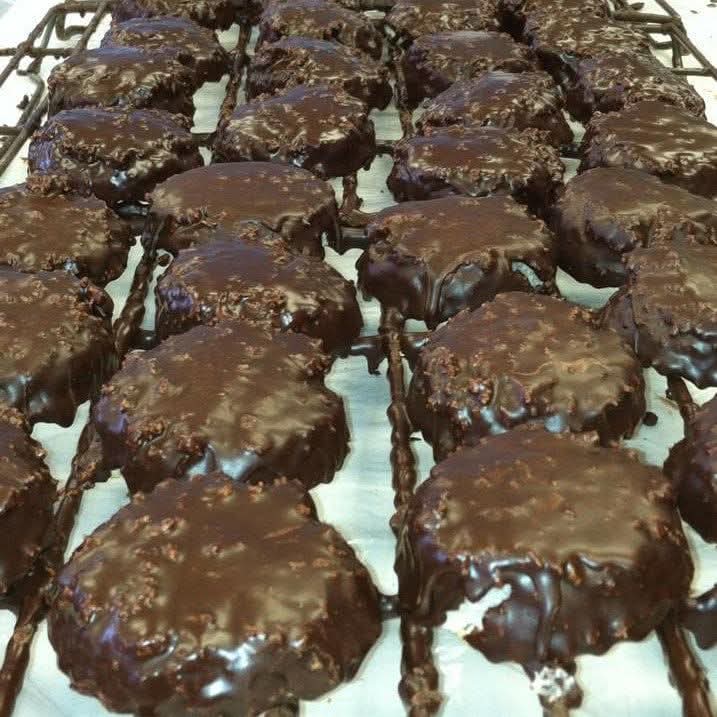
Almond and Coconut Macaroons: The Ultimate Chewy, Nutty, Irresistible Cookie You’ll Make Again and Again
If you’ve been searching for a cookie that delivers chewy texture, rich nutty depth, and a naturally sweet tropical flavor all in one bite, look no further than these incredible Almond and Coconut Macaroons. More than just a simple cookie, these macaroons are a true combination of artisan baking and homestyle comfort. Each bite brings together the dreamy softness of almond flour, the sweet chew of coconut, and the warm aroma of vanilla and almond extract—creating a cookie that feels nostalgic, luxurious, and completely irresistible.
What makes this recipe stand out from all others is its perfect balance. Many macaroons can be either too dry or too dense, but this recipe creates a texture that is crispy on the outside, beautifully chewy inside, and never overly sweet. And thanks to the simplicity of the ingredients, you can whip up a batch in minutes, whether you’re baking for the holidays, hosting guests, or simply craving something delicious alongside your coffee or tea.
Whether you are an experienced baker or a complete beginner, this recipe guides you gently and clearly through every step. And because these cookies are naturally gluten-free (no wheat flour at all!), they make an excellent treat for anyone with dietary restrictions—without sacrificing flavor or texture.
Ingredients & What Each One Does
The beauty of this recipe lies in how each ingredient plays a crucial role, not only in building flavor but also in creating that signature macaroon texture. Understanding what each ingredient contributes helps you master the recipe and adjust it with confidence whenever you like.
1. 2 ½ cups Shredded Coconut
This is the heart and soul of every traditional macaroon. The shredded coconut provides more than just flavor—it creates the chewy structure that makes macaroons so iconic. The natural oils in the coconut keep the cookies moist, while the fibrous texture helps them hold their shape. Using sweetened versus unsweetened coconut will slightly change the sweetness level, but both work beautifully depending on your preference. In this recipe, coconut brings the tropical aroma and luscious chewing experience that makes macaroons unforgettable.
2. 1 cup Almond Flour
Almond flour elevates these macaroons from simple coconut cookies to a gourmet experience. It adds a soft, nutty richness that pairs perfectly with the coconut. Almond flour also helps bind the mixture and ensures the cookies bake up tender rather than crumbly. Because almond flour is naturally gluten-free, it keeps the recipe accessible while delivering bakery-level flavor.
3. ¾ cup Sugar
Sugar does more than sweeten the macaroons. It helps caramelize the edges, giving each cookie a beautifully golden exterior. Sugar also interacts with the egg whites to create a slight crispness on the outside while keeping the interior soft, moist, and luxurious. The result is a cookie with the perfect sweet balance—never overwhelming, always satisfying.
4. 3 Large Egg Whites
Egg whites are the glue that holds everything together. When whisked, even lightly, they create structure, airiness, and moisture. They bind the almond flour and coconut so the cookies are sturdy enough to hold shape without being dense. Egg whites ensure the macaroons bake up with that signature crisp exterior and tender interior, giving each bite contrast and richness.
5. 1 tsp Almond Extract
Almond extract intensifies the nutty profile already provided by the almond flour. A small amount goes a long way, giving the macaroons a warm, aromatic, intoxicating aroma. It makes each cookie taste like it came from an upscale bakery. If you love almond flavor, this is the ingredient that makes it shine.
6. 1 tsp Vanilla Extract
Vanilla adds depth, smoothness, and warmth. It rounds out the flavors, balancing the coconut and almond so neither becomes overpowering. Vanilla is the secret to giving these macaroons their comforting, familiar taste that keeps people reaching for just one more.
With these ingredients combined, you’re already halfway to creating one of the most delicious, chewy, flavorful cookies ever. In the next section, we’ll dive deep into the step-by-step process, showing you exactly how to mix, shape, and bake these macaroons to absolute perfection—even if you’ve never made them before.
How to Make Almond and Coconut Macaroons
Now that we understand exactly how each ingredient contributes to the flavor and structure of these macaroons, it’s time to walk through the process of making them. The following steps are written with care and clarity to ensure that even if this is your very first time making macaroons, you’ll achieve outstanding, bakery-quality results. Each step is intentionally detailed, offering insights into texture, timing, and technique that guarantee success every time.
Step 1: Prepare Your Baking Area
Begin by preheating your oven to 325°F (163°C). This moderate temperature is ideal for macaroons because it allows the cookies to bake slowly and evenly without burning the delicate edges. Line a baking sheet with parchment paper or a silicone baking mat. This prevents sticking and helps the cookies develop their signature golden bottoms without scorching or spreading.
Before you begin mixing, take a moment to gather your ingredients, bowls, and tools. Having everything in place—often referred to as “mise en place”—keeps the process smooth and ensures nothing is forgotten. Because these macaroons use simple ingredients, organization allows the flavors and textures to shine.
Step 2: Combine the Dry Ingredients
In a large bowl, add the shredded coconut, almond flour, and sugar. Use a spoon or spatula to stir them together until everything is fully distributed. This step may seem simple, but it plays an important role in the final outcome. Thoroughly mixing the dry ingredients prevents clumps of sugar, uneven pockets of coconut, and ensures that each macaroon has a perfect balance of nuttiness, sweetness, and texture in every bite.
As you mix, you’ll notice the almond flour lightly coating the coconut shreds. This creates a delicate foundation that helps the wet ingredients absorb evenly later, preventing overly wet or dry areas in your dough.
Step 3: Whisk the Egg Whites
In a separate bowl, add your egg whites. You can whisk them by hand or use an electric mixer. You are not aiming for stiff peaks as in meringue—just whisk until the egg whites look frothy and slightly foamy. This introduces air, improves texture, and helps the macaroons bake up beautifully instead of becoming heavy or dense.
Properly whisked egg whites should appear pale, bubbly, and lightly thickened. This slight aeration contributes to the macaroons’ tender interior while helping the exterior crisp up naturally as they bake.
Step 4: Add Extracts for Flavor
To the bowl of whisked egg whites, add the almond extract and vanilla extract. These extracts are key ingredients that elevate the flavor profile of the macaroons. Stir gently until they are fully incorporated. You’ll immediately notice the sweet and nutty aroma rising from the bowl—a sign that the flavors will bloom beautifully during baking.
Step 5: Bring the Mixture Together
Pour the egg white mixture over the bowl of dry ingredients. Using a spatula or wooden spoon, fold the ingredients together slowly. Folding—rather than stirring aggressively—helps maintain the air introduced into the egg whites. Continue folding until the mixture becomes cohesive. It should be slightly sticky and hold together when pressed lightly with your fingers.
If the mixture feels too crumbly, let it rest for 2–3 minutes. The coconut will begin to absorb the moisture and naturally bind. If it appears too wet, add a tablespoon of coconut or almond flour until the texture is balanced again.
Step 6: Scoop and Shape the Macaroons
Using a tablespoon or a small cookie scoop, portion out mounds of the mixture onto your prepared baking sheet. Shape them gently with your hands as needed, forming small domes that hold their shape but aren’t compressed too tightly. Over-packing the dough will make the texture dense instead of chewy.
Space the macaroons about an inch apart. They do not spread much while baking, but small gaps allow air circulation, helping them bake evenly and develop a light golden exterior.
Step 7: Bake to Golden Perfection
Place the tray on the center rack of your preheated oven. Bake for 18–22 minutes, depending on how golden you prefer your macaroons. Watch closely during the last five minutes—when coconut browns, it browns fast. You’re looking for edges that are lightly toasted and tops that are firm to the touch.
Remove the tray from the oven and allow the macaroons to cool on the sheet for at least 10 minutes. This cooling time helps them set properly. Once they firm up, transfer them to a wire rack to cool completely. Cooling fully enhances the texture and ensures the centers become soft, moist, and chewy.
Pro Tips for Perfect Almond and Coconut Macaroons
- Use room temperature egg whites for better volume and binding.
- Do not overmix—gentle folding keeps the macaroons light.
- Let the mixture rest if it seems dry; coconut absorbs liquid over time.
- Use parchment paper to prevent sticking and promote even browning.
- For extra flavor, dip cooled macaroons into melted dark chocolate.
- For firmer cookies, bake 2–3 minutes longer.
- For softer, more tender cookies, bake on the lower end of the time range.
With these detailed steps and professional tips, your macaroons will turn out delicious every single time—chewy, golden, fragrant, and perfect for any occasion.
STEP 3: Mix the Macaroon Dough Thoroughly
Now that all your ingredients are perfectly measured and ready, it’s time to bring
everything together into a rich, fragrant, sticky macaroon dough. This step is essential
for creating those beautifully chewy, moist centers that make almond-coconut macaroons
so addictive. Follow these extended instructions carefully for the perfect texture.
Combine the Dry Ingredients
- In a large mixing bowl, add the 2½ cups of shredded coconut.
- Pour in the 1 cup of almond flour right on top of the coconut.
- Use your fingertips or a whisk to gently blend them together until evenly distributed.
This dry blending step ensures that every macaroon gets the perfect balance of coconut
texture and almond nuttiness. Mixing the dry ingredients first prevents clumping and helps
everything combine more smoothly when you add the wet ingredients.
Add the Sugar
Sprinkle the ¾ cup of granulated sugar over the coconut–almond mixture.
Don’t dump it all in the center — scatter it around the bowl so it disperses more evenly
as you mix. Use your hands or a large spoon to fold the sugar into the dry ingredients
until everything looks uniform and slightly sandy.
Pour in the Egg Whites
Slowly drizzle the 3 egg whites over the dry mixture. Pouring them gradually
helps them absorb into the coconut instead of collecting at the bottom of the bowl.
Using a rubber spatula or spoon, begin folding the mixture together. At first it will seem
loose and dry, but keep mixing. The egg whites will eventually moisten the coconut and bind
everything into a sticky, cohesive dough.
Add the Flavor Extracts
- 1 teaspoon almond extract
- 1 teaspoon vanilla extract
Pour both extracts over the dough and mix again, making sure every bit of coconut absorbs
the aromatic almond–vanilla combination. The fragrance should be intense, sweet, and warm.
Final Dough Texture Check
Your dough is ready when:
- It sticks together when pressed between your fingers.
- It is slightly glossy from the egg whites.
- It forms soft clumps that hold their shape.
If the dough still seems too dry, add 1–2 teaspoons more egg white.
If it’s too wet, sprinkle in a spoonful of almond flour.
In the next section, we will shape the macaroons perfectly so they bake evenly and look
bakery-quality. Continue to the next part when you’re ready.
STEP 4: Shape the Almond & Coconut Macaroons
Now that your dough is beautifully mixed and infused with rich almond–vanilla aroma,
it’s time to shape each macaroon. This step is crucial because the shape determines
not only how the cookies look but also how evenly they bake, how chewy they become,
and how golden the edges turn. Take your time — shaping is where your macaroons
begin to look like real bakery-style treasures.
🥄 Prepare Your Baking Sheet
Before forming the dough balls, line your baking sheet properly. This ensures
the macaroons release cleanly after baking and prevents burning.
- Place a sheet of parchment paper across your baking tray.
- Alternatively, use a silicone baking mat for a more professional finish.
- Avoid greasing the tray directly — the macaroons bake better on a dry surface.
Start Forming the Macaroons
You can shape your macaroons using either a scoop or your hands. Both methods work,
but using a scoop ensures they all come out the same size.
✔ Method 1: Using a Cookie Scoop (Highly Recommended)
- Use a 1 to 1½ tablespoon-sized scoop.
- Dip the scoop into water first — this prevents sticking.
- Firmly press the dough inside the scoop to pack it tightly.
- Release the dough onto the prepared baking sheet.
This method produces perfectly rounded, uniform macaroons that look beautifully
professional and bake evenly.
✔ Method 2: Using Your Hands
- Wet your hands lightly with water.
- Scoop up a small amount of dough (about 1 tablespoon).
- Press it between your palms and roll gently until it forms a compact mound.
- Place each mound onto the baking sheet about 1½–2 inches apart.
Hand-shaped macaroons tend to have a more rustic, homemade charm. They will still bake
beautifully — just be sure they are all roughly the same size.
Ensure Proper Spacing
Although macaroons do not spread drastically like regular cookies, they do expand
slightly while baking. For best texture:
- Keep at least 1½ to 2 inches between each macaroon.
- Make sure none of them are touching before baking.
Optional: Create the Classic “Macaroon Peak” Shape
Many traditional macaroons have a small pointed top. To create this:
- After scooping, pinch the top of the macaroon lightly using your fingertips.
- This gives the macaroon a signature rustic bakery-style look.
Final Touch Before Baking
Once all the macaroons are shaped, pause for a moment to assess the tray:
- Are they uniform?
- Are they tightly packed so they won’t fall apart?
- Are they spaced well?
If everything looks perfect, your tray of macaroons is ready for the baking stage.
The next part will cover baking them to golden perfection.