
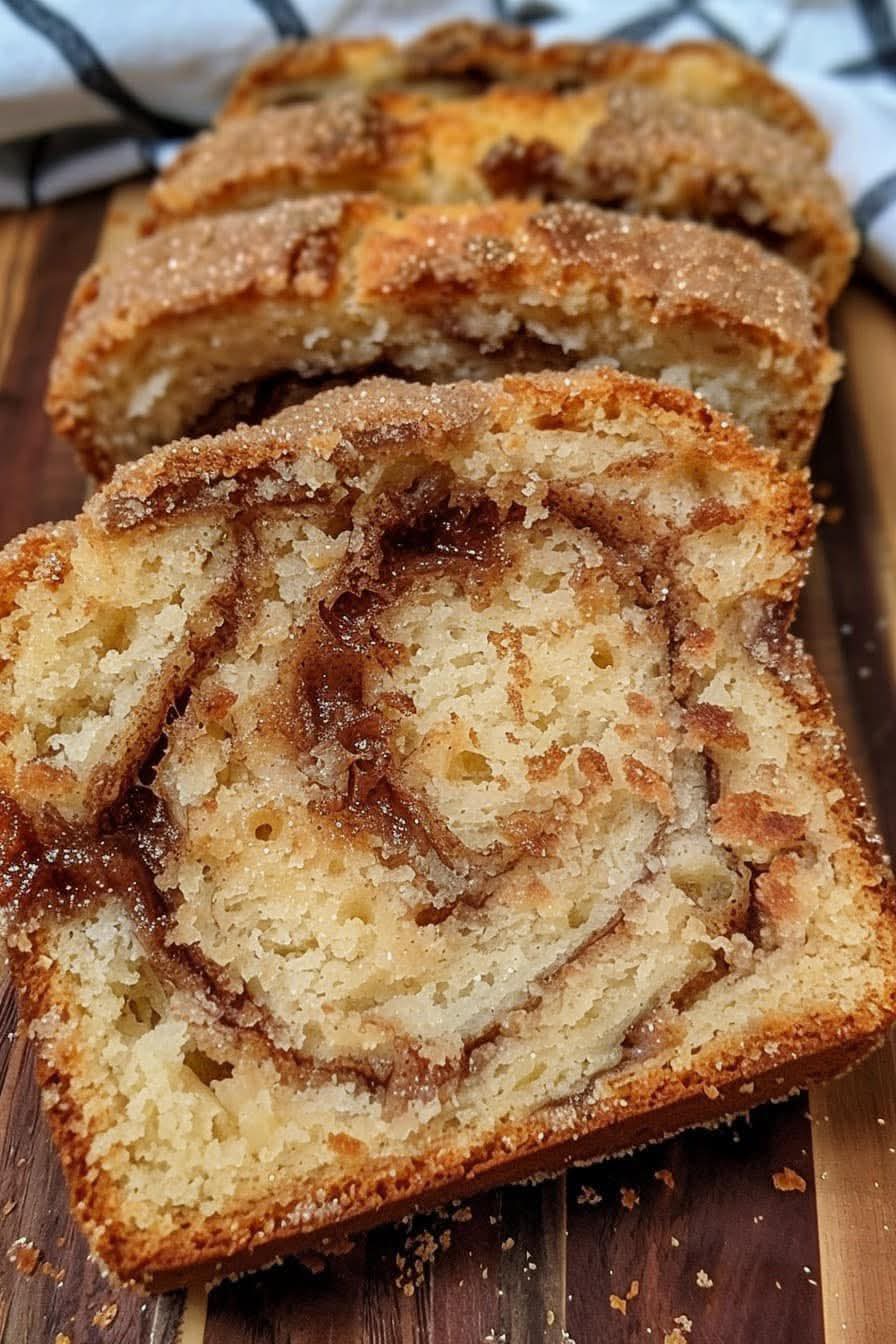
Irresistibly Moist Amish Cinnamon Bread
Amish Cinnamon Bread is a classic quick bread that fills the kitchen with warm cinnamon-sugar aroma and slices into rich, buttery rounds with a tender crumb and pronounced cinnamon swirl. This two-loaf recipe is ideal for gifting, brunch, or keeping on hand for an indulgent breakfast. Below is a complete, easy-to-follow guide with ingredient explanations, detailed steps, troubleshooting, variations, storage, and a printable recipe card.
Why this bread works
Unlike yeast breads, this quick bread relies on chemical leaveners and the emulsifying power of butter, eggs, and buttermilk to produce a moist, tender crumb quickly and reliably. The cinnamon-sugar swirl adds pockets of concentrated sweetness and a pleasant textural contrast. Buttermilk contributes tang and acidity which tenderizes gluten and reacts with baking soda for lift. The result is a soft, buttery loaf with cinnamon ribbons in every bite.
Ingredients & what each one does
For the batter
- 1 cup (227 g) butter, softened — Fat for richness, flavor, and tender crumb. Soften, don’t melt, to trap air when creaming for lightness.
- 2 cups (400 g) granulated sugar — Sweetness and structure; helps stabilize aeration when creamed with butter.
- 2 large eggs — Bind and provide structure; eggs add moisture and help set the crumb.
- 2 cups (480 ml) buttermilk — Acidic dairy that tenderizes gluten, adds tang, and reacts with baking soda for leavening. Also increases moisture retention.
- 4 cups (500 g) all-purpose flour — The structural backbone; provides proteins that form gluten when hydrated—mix just until combined to avoid toughness.
- 2 teaspoons baking soda — Reactive leavening that works with buttermilk’s acidity to lift the loaf.
For the cinnamon-sugar swirl
- 2/3 cup (135 g) granulated sugar — Sweet contrast in the swirl.
- 2 teaspoons ground cinnamon — Warm aromatic spice that defines the swirl.
Notes & swaps: Use cultured buttermilk or make a substitute by adding 2 tbsp lemon juice or vinegar to 2 cups milk and letting rest 5–10 minutes. For dairy-free, use nondairy yogurt and a soda-based substitute (but results vary).
Essential tools
- Two standard 9×5-inch loaf pans (well-greased)
- Large mixing bowl and medium bowl
- Electric mixer or sturdy whisk & elbow grease
- Rubber spatula and wooden spoon
- Wire rack for cooling
- Toothpick or cake tester
Step-by-step instructions (detailed)
1 — Preheat & prepare
Preheat the oven to 350°F (175°C). Grease two 9×5-inch loaf pans generously with butter or nonstick spray; for easy release, optionally line bottoms with parchment with a small overhang.
2 — Cream butter and sugar
- In a large bowl, beat 1 cup softened butter with 2 cups sugar until light and fluffy. If using an electric mixer, start at medium speed for 2–4 minutes. Properly creamed butter and sugar will be paler in color and aerated, which helps the crumb.
3 — Add eggs
- Add the 2 eggs one at a time, beating well after each addition to fully incorporate. Scrape down the bowl so ingredients incorporate evenly.
4 — Alternate flour and buttermilk
- In a separate bowl, whisk together 4 cups all-purpose flour and 2 teaspoons baking soda.
- With mixer on low, add the dry ingredients to the butter mixture in three additions alternating with 2 cups buttermilk, beginning and ending with the flour. Mix each addition just until combined—do not overmix. The batter should be thick but pourable.
5 — Prepare the cinnamon sugar
In a small bowl, combine 2/3 cup sugar with 2 teaspoons ground cinnamon. Stir until evenly combined.
6 — Layer the batter and swirl
- Divide roughly half the batter between the two prepared loaf pans, spreading into an even layer.
- Sprinkle about 3/4 of the cinnamon-sugar mixture evenly over the batter in each pan (reserve some for the top swirl).
- Top with the remaining batter, spreading carefully to cover the sugar layer.
- Sprinkle remaining cinnamon sugar on top, then use a butter knife or skewer to gently swirl the top layer in a figure-eight or S-shaped motion to create a marbled effect—avoid overmixing to keep distinct ribbons.
7 — Bake
- Bake in the preheated oven for 50–60 minutes, rotating pans halfway through for even browning if your oven has hot spots.
- Test doneness by inserting a toothpick into the center; it should come out clean or with a few moist crumbs (but not wet batter).
- If the tops brown too quickly, tent loosely with foil for the remaining bake time.
8 — Cool and slice
- Let loaves cool in the pans for 10 minutes, then run a knife around the edges and invert onto a wire rack to cool completely.
- For best texture and cleaner slices, wait until fully cooled before cutting—warm bread can crumble or compress.
Why these steps matter (baking science)
Creaming butter and sugar traps air, promoting rise and tender crumb. Eggs add structure and emulsify fat and liquid for uniform batter. Alternating dry and wet ingredients prevents overworking gluten while ensuring even hydration. Buttermilk’s acidity reacts with baking soda, producing carbon dioxide for lift and contributing to a moist, tangy crumb. The cinnamon-sugar layer melts and partly dissolves during baking, creating candy-like pockets and a visible swirl.
Pro tips for perfect Amish Cinnamon Bread
- Room-temperature ingredients: Butter, eggs, and buttermilk at room temp incorporate more evenly.
- Don’t overmix: Mix until just combined—overworking the flour develops gluten and makes the bread dense.
- Even slicing: If you make this as a single loaf, ensure even batter distribution; for neat swirls, layer in thin, even amounts.
- Control oven heat: Use an oven thermometer—home ovens vary; 350°F is the target internal baking temperature for even crumb.
- Flavor boost: Add 1 tsp vanilla extract to the batter or a pinch of nutmeg to the cinnamon sugar for extra warmth.
- Toasting the sugar: For crunchier pockets, sprinkle an extra tablespoon of cinnamon-sugar on top mid-bake (watch closely so it doesn’t burn).
Common mistakes & fixes
- Dense or heavy loaf: Cause: overmixing or cold ingredients. Fix: ensure ingredients are room temp and fold gently.
- Undercooked center: Cause: too thick batter or oven too cool. Fix: use a toothpick to check and extend bake time; cover top with foil if browning too much.
- Too sweet or too much swirl sinking: Cause: too much cinnamon-sugar or it was pressed too deep. Fix: reserve some sugar for the top and swirl lightly.
- Gummy texture: Cause: too much liquid or underbaked. Fix: check measurements; bake until tester comes out clean and cool completely before slicing.
Variations & flavor ideas
- Maple Cinnamon Bread: Replace 1/4 cup of buttermilk with pure maple syrup and add 1/2 tsp maple extract. Use brown sugar in swirl for maple depth.
- Apple Cinnamon Swirl: Fold in 1 cup finely diced apples tossed with 1 tbsp flour to prevent sinking.
- Brown Butter: Brown the butter and cool slightly before creaming for a nutty flavor.
- Streusel Topping: Make a small streusel (butter, flour, brown sugar, oats) and sprinkle on top before baking for crunchy contrast.
- Lemon-Cinnamon: Add 1 tbsp lemon zest to batter and a light lemon glaze after cooling for a bright finish.
Serving suggestions
- Warm with butter: Toast a slice lightly and spread with butter.
- With coffee: Pairs beautifully with a cup of coffee or chai tea.
- French toast: Use slices to make decadent cinnamon French toast—soak briefly and fry until golden.
- Dessert: Serve with vanilla ice cream and a drizzle of caramel sauce.
Make-ahead, storage & freezing
Make-ahead
This bread is ideal for preparing ahead. Bake, cool completely, wrap tightly in plastic wrap, and store at room temperature for 1–2 days. For best texture, slice just before serving.
Storage
Store wrapped at room temperature for 2–3 days. For longer freshness (up to 5 days), refrigerate in an airtight container—bring to room temperature before serving to soften the crumb.
Freezing
Freeze whole loaves or individual slices: wrap tightly in plastic wrap and then foil, or place in freezer bags. Freeze up to 3 months. Thaw overnight in the refrigerator or at room temperature for several hours. Refresh slices in a warm oven or toaster before serving.
Printable Recipe Card
Yield
Two 9×5-inch loaves (about 16–20 slices total)
Ingredients
Batter
- 1 cup (227 g) butter, softened
- 2 cups (400 g) granulated sugar
- 2 large eggs
- 2 cups (480 ml) buttermilk
- 4 cups (500 g) all-purpose flour
- 2 teaspoons baking soda
Cinnamon-sugar swirl
- 2/3 cup (135 g) granulated sugar
- 2 teaspoons ground cinnamon
Directions (short)
- Preheat oven to 350°F (175°C). Grease two 9×5-inch loaf pans.
- Cream butter and sugar until light. Add eggs one at a time.
- Alternate adding dry mix (flour + baking soda) and buttermilk, beginning and ending with flour. Mix until just combined.
- Divide half the batter into pans, sprinkle cinnamon-sugar, top with remaining batter, swirl the top, and sprinkle remaining sugar.
- Bake 50–60 minutes until a toothpick comes out clean. Cool 10 minutes in pans, then transfer to a rack to cool completely.
Approximate nutrition (per slice)
Values vary with slice size. Approx per slice (1 of 16): ~350–420 kcal; Fat: 14–18 g; Carbs: 50–60 g; Protein: 4–6 g.
Final thoughts
This Amish Cinnamon Bread is a reliably comforting quick bread that rewards simple technique with rich flavor and tender texture. It’s ideal for family breakfasts, hostess gifts, or weekend baking projects. With a few small swaps you can customize it for seasonality or dietary needs while keeping the soul of the recipe intact: buttery richness, tangy buttermilk, and cinnamon ribboned through every slice.