
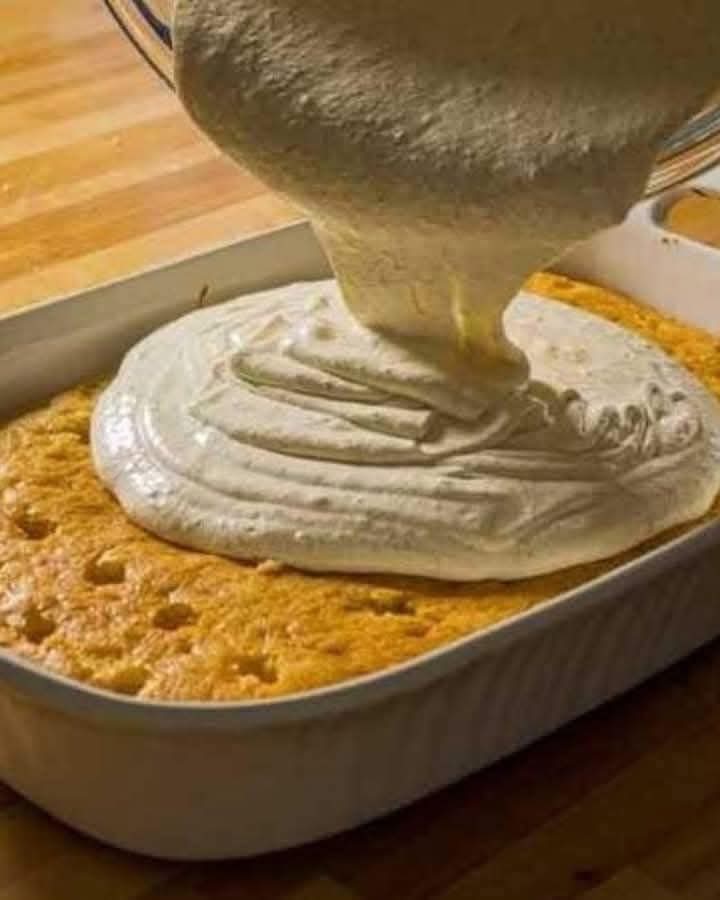
Irresistible Layered Custard Cake — Fluffy, Creamy & Effortlessly Elegant
If you’re hunting for a dessert that looks bakery-made yet comes together with pantry staples, this Layered Custard Cake is your sweet spot. Two tiers of pillowy sponge cake cradle a generous layer of silky vanilla custard, then the whole beauty is finished with cloud-soft whipped cream. It’s refined enough for birthdays and holidays, but simple enough for Sunday dinner—and it slices like a dream.
Below you’ll find a complete, expansive guide: detailed ingredients with explanations, a reliable step-by-step method, the culinary science that makes it work, advanced professional tips, troubleshooting, variations, serving ideas, make-ahead strategies, storage and freezing instructions, and a printable recipe card section. This version is intentionally long and thorough so you can confidently bake a stunning layered custard cake every time.
In this guide
- Ingredients & What Each One Does
- Step-by-Step Instructions
- Why This Recipe Is Loved (science & sensory)
- Pro Tips for Success
- Serving Suggestions & Presentation
- Make-Ahead, Storage & Freezing
- Troubleshooting & Common Mistakes
- Variations & Flavor Twists
- Printable Recipe Card
Ingredients & What Each One Does
For the Sponge Cake
- 4 large eggs (room temperature) — Eggs are the lift engine here. Whipping whole eggs to a thick foam traps air, creating a light, airy sponge without chemical leaveners. Room temperature eggs whip more voluminously and more quickly.
- 1 cup (200 g) granulated sugar — Sugar stabilizes the whipped eggs and dissolves into the batter for even sweetness. It also contributes to browning and tenderness.
- 1/2 cup (120 ml) whole milk, warmed slightly — Adds moisture and slight structure; warmed milk helps relax the batter and maintain volume when folded in.
- 1/2 cup (120 ml) neutral vegetable oil — Oil keeps the sponge tender and helps the cake remain moist even after chilling; unlike butter, oil remains fluid at refrigeration temperatures.
- 1 tsp vanilla extract — Simple, classic aroma that layers into both cake and custard.
- 1 1/2 cups (190 g) all-purpose flour, sifted — Provides structure. Folding flour gently preserves the whipped texture while giving the cake enough integrity to support layers.
- Pinch of fine salt — Enhances flavor, balances sweetness, and tightens the perception of vanilla.
For the Custard Cream (Pastry Cream)
- 3 cups (720 ml) whole milk — The base of a rich, creamy custard; whole milk balances richness and lightness when thickened properly.
- 3 large egg yolks — Yolks provide richness, color, and emulsifying properties that help the custard set smoothly without being heavy.
- 3/4 cup (150 g) granulated sugar — Sweetens and helps stabilize the custard; sugar also affects the set point (higher sugar lowers the temperature at which proteins coagulate).
- 1/3 cup (40 g) cornstarch — Primary thickener for a silky, stable custard that holds between cake layers without becoming gelatinous.
- 1 tsp vanilla extract (or paste) — For pure vanilla flavor; vanilla paste or a scraped vanilla bean intensifies flavor.
- 2 tbsp unsalted butter (optional) — Swirled in at the finish for a glossy mouthfeel and added richness.
For Assembly & Topping
- 1 cup (240 ml) heavy whipping cream — Whips to a feathery topping that balances dense custard; lightly sweetened.
- 2 tbsp powdered sugar — Sweetens whipped cream without grit; dissolves cleanly.
- Optional garnish: fresh berries, fruit compote, chocolate shavings, toasted nuts, or edible flowers.
Note: You can scale quantities to make a single 9-inch two-layer cake (as given), or convert to a sheet cake, individual trifles, or mini-cakes using the same ratios. Ingredient weight accuracy improves results—if you have a kitchen scale, use it.
Why these ingredients and technique?
This recipe is intentionally built on two complementary textures: an airy sponge and a dense-yet-silky custard. The sponge provides structure while remaining tender; the custard supplies creaminess and richness. Using whole eggs for the sponge avoids the complexity of separating yolks and whites while still delivering excellent lift when beaten properly. Cornstarch-based pastry cream is chosen over gelatin-based mousses because it yields a stable, spoonable cream that slices cleanly with the cake and reheats gently if needed.
Step-by-Step Instructions
Prep & organization (mise en place)
Before you begin: preheat, line, measure, and ready tools. Baking is precise—having everything measured and within reach prevents overwhipping or missed steps.
- Preheat oven to 350°F (175°C).
- Line the bottoms of two 9-inch (23 cm) round cake pans with parchment paper circles; lightly grease the sides and dust with flour or use non-stick spray.
- Bring eggs to room temperature (place cold eggs in warm water for 5–10 minutes if needed).
- Whisk the milk and oil together; warm the milk slightly (not hot) to about body temperature to help integrate smoothly.
Make the sponge — Step A: Whip eggs & sugar
- In the bowl of a stand mixer fitted with the whisk attachment (or with a hand mixer), combine 4 large room-temperature eggs and 1 cup (200 g) sugar.
- Beat on high speed until the mixture becomes pale, thick, and tripled in volume—this is the ribbon stage. When you lift the whisk, the ribbon should rest on the surface for several seconds before slowly dissolving back in. This takes about 6–8 minutes with a powerful stand mixer; hand mixers may take longer.
Make the sponge — Step B: Fold in liquids & flour
- Gently stir 1 tsp vanilla extract into the warmed milk and oil mixture.
- Reduce mixer speed to low and drizzle the milk-oil mixture into the whipped eggs, integrating slowly to maintain volume. Alternatively, pour all at once and fold gently with a spatula—either way, avoid deflating the foam.
- Sift 1 1/2 cups (190 g) all-purpose flour and a pinch of salt over the egg mixture. Use a large flexible spatula to fold the flour in three additions, turning the bowl and using broad strokes. Stop folding as soon as streaks of flour disappear—overfolding deflates the sponge.
Bake the sponges
- Divide the batter evenly between the two prepared 9-inch pans. Smooth the tops with a spatula, but do not press down.
- Bake at 350°F (175°C) for 18–22 minutes, or until the cakes are pale golden and spring back slightly when touched. A toothpick inserted in the center should come out with a few moist crumbs but not raw batter.
- Cool in pans on a wire rack for 8–10 minutes, then invert and remove parchment. Cool completely before assembly—warm sponge will melt your custard or whipped cream.
Make the custard (pastry cream)
- In a medium saucepan, bring 3 cups (720 ml) whole milk to a gentle simmer over medium heat; do not let it boil.
- While milk warms, whisk together 3 large egg yolks, 3/4 cup (150 g) sugar, and 1/3 cup (40 g) cornstarch in a heatproof bowl until pale and smooth—no lumps.
- Temper: slowly ladle about 1/3 of the hot milk into the yolk mixture while whisking constantly to avoid curdling. Then pour the tempered yolk mixture back into the saucepan with the remaining milk, whisking continuously.
- Return the pan to medium heat and cook, whisking constantly, until the custard thickens and comes to a gentle boil. Once it boils, cook for 30–60 seconds while whisking to fully activate the cornstarch. You should have a thick, glossy pastry cream.
- Remove from heat, stir in 1 tsp vanilla extract and optionally 2 tbsp butter for silkiness. Transfer to a shallow bowl, press plastic wrap directly onto the surface to prevent skin, and chill until fully cold—at least 2 hours.
Whip the cream
- Chill your mixing bowl and whisk or beaters for 10–15 minutes if possible.
- Pour 1 cup (240 ml) heavy whipping cream into the bowl with 2 tbsp powdered sugar and whip to soft-medium peaks. Be careful not to overwhip—stop when the cream holds shape but is still pillowy.
Assemble the cake
- Place one cooled sponge layer on your serving plate or cake board. If the top dome is uneven, level gently with a serrated knife (save crumbs).
- Spread an even layer (about 1.5–2 cups) of chilled pastry cream over the sponge, leaving a 1/4 inch border for clean edges. Use an offset spatula for a smooth finish.
- Place the second sponge layer on top, pressing gently to seat it—do not compress the custard aggressively.
- Frost the entire cake with the lightly sweetened whipped cream. You can do a thin crumb coat and chill 15 minutes, then add a final smooth coat, or simply frost once for a rustic look.
- Garnish as desired: fresh berries, fruit compote, grated chocolate, or toasted sliced almonds work beautifully.
- Chill at least 1 hour before slicing to allow layers to set for neat, even slices.
Why This Recipe Is Loved — Science & Sensory
The emotional appeal of this cake is rooted in contrast and balance. The sponge is feather-light and slightly tender from oil; it provides structural lift without overwhelming richness. The custard is dense, silky, and intensely vanilla—its texture bridges cake and cream, giving every forkful body and luxury. Finally, the whipped cream brings breathiness and a hint of sweetness that brightens the profile.
The science: beaten whole eggs trap air in a protein-stabilized network; sugar strengthens that foam and raises coagulation temperature for a stable rise. Cornstarch gelatinizes when heated with liquid, thickening pastry cream without the rubberiness of excess flour. Chilling pastry cream allows retrogradation—starch molecules firm up slightly, producing a spreadable consistency that still remains tender.
Pro Tips for Success (baker-level)
- Room-temperature eggs: essential for maximum volume; if you forgot, set eggs in a bowl of warm water for 5–10 minutes.
- Ribbon stage test: when the egg-sugar mixture falls in ribbons that sit briefly on the surface, you’ve trapped enough air for a lofty sponge.
- Gentle folding: use a large spatula and folding motion—lift from the bottom and fold over—to preserve air.
- Warm liquids: adding slightly warmed milk keeps the batter cohesive while preserving aeration.
- Even baking: rotate pans in the oven if your oven has hot spots; use an oven thermometer for accurate temperature.
- Prevent curdling: always temper eggs when combining with hot milk for pastry cream; whisk continuously until thickened.
- Chill properly: cool pastry cream fully before assembling to avoid seeping; chilling the assembled cake helps slice cleanly.
- Decorative finish: pipe whipped cream rosettes or leave smooth and scattered with fruit for a modern look.
Serving Suggestions & Presentation
This cake’s gentle aesthetic suits both casual and formal settings. For a classic look